Choosing stone for a commercial project is rarely about appearance alone. Cost, durability, fabrication, and long-term maintenance all have to be considered at the same time. That is one reason white granite countertops continue to be used in both commercial and residential spaces. They offer the natural depth of stone, but also the hardness and stability needed for daily use.
Royal White is a practical example of this type of material. As one option within the white granite countertops category, it does not rely on heavy contrast or dramatic movement. Its value comes from a calmer surface tone, steady performance, and good adaptability across kitchens and vanity areas. For projects where the surface needs to look clean, stay reliable, and support repeated installation, materials like Royal White remain a strong choice.
Commercial spaces need materials that can handle more than one requirement. The surface should be easy to match with different interiors, but it also needs to stand up to frequent use. Royal White works well in this setting because it sits between these two needs. It has enough natural variation to avoid looking flat, but not so much movement that it becomes difficult to coordinate across multiple units.
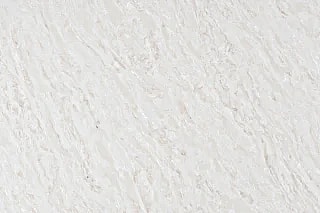
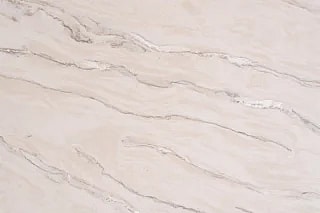
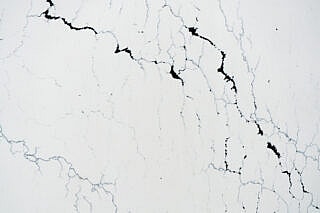
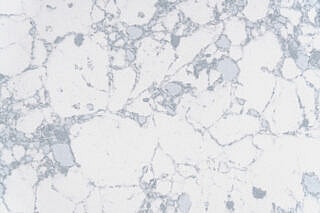
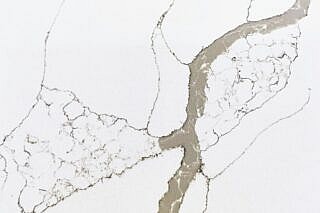
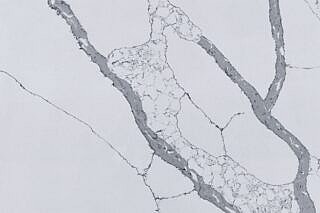
Royal White has a soft gray and off-white base with fine mineral particles spread through the surface. The pattern is quiet rather than bold. From a distance, it reads as clean and consistent. Up close, the natural details give it depth.
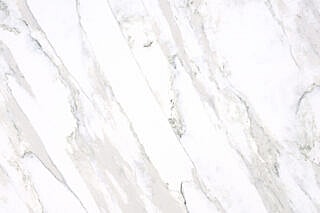
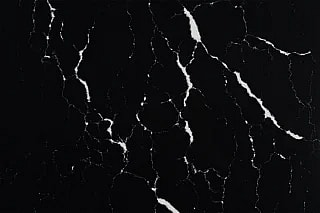
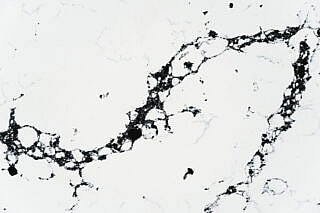
While some projects may use black and white granite for stronger contrast, Royal White follows a more controlled and lighter visual approach. This is important for commercial interiors. A surface with too much contrast can quickly dominate the room. Royal White is easier to integrate into the overall design. It works with light cabinetry, darker wood finishes, and metal details without creating visual conflict. It also holds a steady appearance under different lighting, which helps when the same material is used across several rooms or units.
Royal White is a natural granite with a dense structure. Compared with marble, granite generally offers stronger resistance to scratching and daily wear. That makes it suitable for areas where the surface is used often, including kitchens and vanity spaces.
When applied in kitchen countertop applications, this strength becomes useful in everyday operation. The surface can handle regular contact, cleaning, and use without losing its practical value quickly. At the same time, it still keeps the character expected from natural stone countertops. The mineral pattern is not perfectly identical from piece to piece, but the overall tone remains controlled enough for larger commercial applications.
A countertop doesn’t really start at installation, especially in a typical granite kitchen countertop project. By the time it reaches the site, most of the work has already been done. Cutting, sizing, alignment—all of it happens earlier in the process. This project follows a prefab approach. It’s not complicated, but it is controlled. That makes a difference.
Each slab is cut based on project drawings before delivery. Nothing is left for adjustment on-site unless necessary. Pieces are divided into smaller components, each one matching a specific position.
This reduces guesswork during installation. Workers don’t need to reshape or recut material in the field. It also keeps the result more consistent, especially when the same layout is repeated across multiple units. For larger projects, this kind of preparation is not optional. It simply avoids problems later.
The visible surfaces are polished first. That step improves smoothness and brings out the natural grain. After that, a protective treatment is applied. It’s not about making the surface “perfect.” It’s about making it usable.
In kitchen areas, the treatment helps limit the impact of oil, water, and residue. In vanity spaces, it deals with moisture, cleaning agents, and daily contact. Over time, that reduces maintenance effort. The material still behaves like natural stone, but with fewer practical issues during use.
Not every part of the surface needs the same thickness. That’s why this project uses both 30mm and 20mm. It’s a simple idea. Use more where strength matters. Use less where it doesn’t.
For main countertop areas, 30mm is used. These are the sections that take the most stress—cutting, impact, weight from appliances. A thinner slab would still work, but not as reliably over time. There’s also a visual reason. A thicker surface looks more solid. On larger elements like islands, that difference is noticeable.
The 20mm material is used elsewhere. Backsplashes, edge strips, smaller connection pieces. These areas don’t carry the same load, so there’s no need to keep everything at full thickness. Using thinner pieces here reduces weight. It also makes installation easier. That matters more than it sounds.
In vanity areas, everything shifts a bit. The structure is lighter. The support is different. So 20mm is used throughout.
Bathroom countertops are often installed on cabinets that aren’t designed for heavy loads. Reducing thickness helps avoid long-term stress on those structures. At the same time, the material still meets the basic strength requirements expected from natural stone surfaces. Visually, the thinner edge works better in smaller spaces. It feels lighter. Less bulky. That suits the scale of a bathroom.
There isn’t a single feature that defines this project. It’s more about how everything comes together. Material selection, fabrication, and installation are closely connected. None of these steps work on their own.
With this type of material, the advantage is consistency. The surface can be used across different spaces without needing major adjustments. Kitchens and vanity areas can share the same material, even if the structure behind them changes. From a design standpoint, the tone stays neutral. It doesn’t create conflict. From a practical standpoint, the durability of natural stone supports long-term use. For commercial projects, that combination is usually enough. It doesn’t need to be more complicated than that.