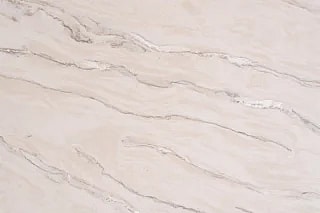
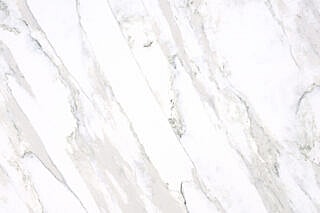
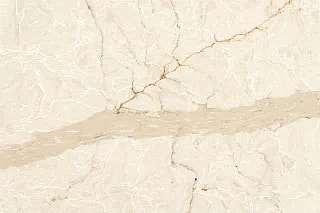
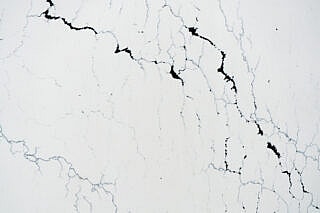
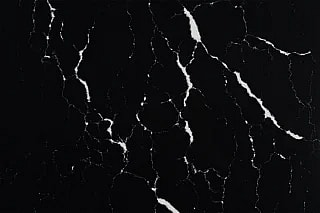
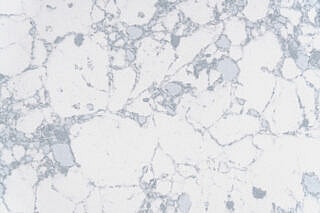
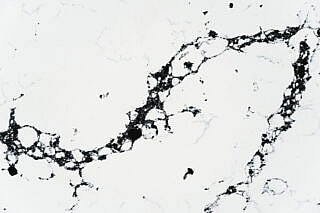
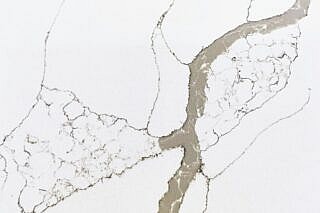
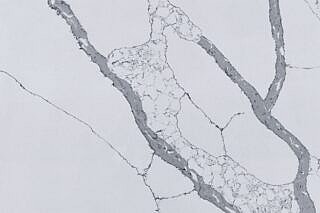
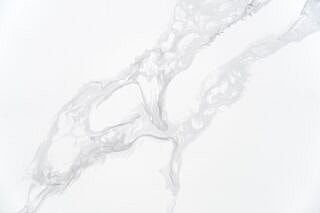
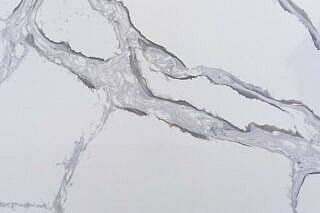
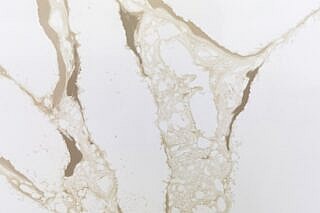
Soft white surfaces with controlled gray movement have become increasingly common in modern hospitality interiors, especially in guestrooms where visual balance matters more than dramatic contrast. In this hotel project, PMC2894GJ was applied across guestroom vanity and kitchen areas, using white quartz with grey veins to create a calmer and more refined atmosphere.
In hotel guestrooms, this kind of visual balance matters more than many people realize. Guests interact closely with vanity countertops, kitchen surfaces, and bathroom details every day. If the material feels too visually busy, compact spaces can quickly become overwhelming. Softer stone movement tends to work better in hospitality interiors because it keeps the room feeling lighter, cleaner, and easier to stay in over time.
Under warm hotel lighting, the gray movement softens cabinetry lines and helps the space feel less rigid. During the day, natural light shifts quietly across the surface, giving the countertop a more relaxed appearance without becoming the visual center of the room.
Hotel projects used to emphasize dramatic marble patterns with large veins and strong contrast. At first glance, which is always considered luxurious. However, within the hotel rooms themselves, these materials may be visually overwhelming, especially with consistent interior designs in the room. PMC2894GJ has taken a different route with its grayish movement on the surface, which creates a sense of calmness in the design and control over the texture. Rather than being overwhelming, the countertop complements the surrounding cabinetry, lighting, and fixtures to keep everything in harmony.
This trend has become increasingly common in hotel interiors where designers focus on comfort and visual harmony for the future.
Throughout fabrication, connected countertop sections followed the same vein-direction logic so the gray movement could continue naturally across different areas of the surface.
This becomes especially important in hotel kitchen layouts. Kitchen spaces are usually compact. If seams interrupt the movement too aggressively, or if the veins suddenly shift direction, the countertop immediately starts looking fragmented. Small guestrooms tend to magnify those issues very quickly.
For PMC2894GJ, the soft direction gives a sense of cohesion to the countertop. As a result, the whole room seems more clean. Subtlety continues to play an important role here. This is precisely what makes it suitable for hospitality settings. Instead of being overtly visual, the countertop generates a calmer space despite its frequent use every day.
The project also used straight edge laminated fabrication across multiple countertop sections. Instead of relying on oversized slab thickness, the edge construction creates a thicker visual profile through precise fabrication work. The countertop gains more architectural presence while still keeping the room visually light.
In boutique hotels and executive guestrooms, these smaller fabrication details make a noticeable difference. PMC2894GJ works especially well with this type of edge treatment because the gray movement remains relatively soft. When the surface folds over the edge, the veins continue more naturally instead of creating sharp visual breaks. The finished Calacatta quartz slab feels cleaner, quieter, and more controlled overall.
Guests interact closely with vanity edges, kitchen corners, and sink surrounds every day. Those areas shape how the room feels more than most people realize.
Modern hospitality interiors increasingly favor material continuity throughout the guestroom. Instead of separating kitchen, vanity, and bathroom areas with completely different finishes, many hotels now use one consistent stone surface across multiple spaces.
PMC2894GJ was applied across both kitchen countertops and vanity areas to support that approach. The white quartz with grey veins transitions naturally between spaces, helping the room feel more connected overall. Strong marble movement can easily overpower compact guestrooms. Softer gray veining tends to hold visual balance much better over time.
Hotel kitchens deal with constant daily activity. Coffee cups, tea, wine, snacks — these countertops experience far more use than many people expect.
That means appearance alone is never enough. PMC2894GJ uses a dense engineered quartz structure designed for easier long-term maintenance. Tea stains, coffee residue, or wine spills can generally be cleaned without difficult upkeep, which helps reduce housekeeping pressure between guest stays.
There is another advantage as well. Because the veining stays relatively controlled, the countertop continues looking organized even after repeated use. Some dramatic marble-look surfaces start feeling visually chaotic over time, especially in smaller hospitality spaces. PMC2894GJ avoids that problem by keeping the movement softer and more balanced.
This is one reason many designers continue choosing white quartz kitchen countertops for hospitality projects where visual stability matters just as much as durability.
Vanity spaces serve a different purpose inside guestrooms. They are more personal and more relaxed.
PMC2894GJ uses softer gray movement rather than sharp contrast, which helps the vanity area feel calmer under warm hospitality lighting. The surface does not overpower mirrors, fixtures, or surrounding finishes. Instead, it supports the atmosphere quietly in the background.
That softer direction fits naturally within current hospitality design trends. Many luxury hotels are moving away from heavily decorative interiors and leaning toward cleaner, quieter spaces with stronger material balance. Softer Calacatta white quartz fits comfortably within that direction because it feels refined without trying too hard.
Large hotel projects place enormous pressure on fabrication coordination and scheduling for installations. Just one defective countertop or mislabeled piece can delay multiple guestrooms. Thit is the reason fabrication control is so important.
Hotel projects often involve concentrated shipping schedules and large-scale transportation. Because of that, countertop protection becomes extremely important during delivery. PMC2894GJ components were packaged using layered protection methods, including foam protection, pearl cotton wrapping, and reinforced wood support around vulnerable edges and corners.
Transportation damage affects more than the stone itself. It can disrupt installation schedules across multiple guestrooms and create unnecessary delays during hospitality construction. Reducing those risks helps projects stay on track.
PMC2894GJ offers more than a decorative marble-look surface. In hospitality interiors, the real value of a material comes from how well it performs after years of daily use.
The softer movement of the white quartz with grey veins helps guestrooms feel calmer and more visually balanced over time. Straight edge fabrication adds structure without making the space feel heavy. Controlled fabrication helps guestrooms maintain a more consistent appearance across large hotel projects.
Guests rarely remember the loudest room. They remember spaces that feel comfortable, balanced, and easy to live in during their stay. That is where PMC2894GJ works best.